
Chapter I
The Long Dark
They said the dark came first as a whisper. Not a storm, not a war — only a thinning of the light, as if the sun had grown tired of its work. In the valleys, lamps burned longer. Children were called in before the last gold left the ridgeline. And in the high passes, where the wind has always spoken plainly, the old watch-stones began to go cold.
Something was moving in the places men do not name. It did not need an army. It needed only fear, and the long hours after midnight, and the slow forgetting of what is good.
Chapter II
The Order
Long before that winter, there had been an order. They kept no palaces and asked no tribute. They lived in a keep of black stone above the treeline, and they called themselves the Wardens of the Ember — though the villages below had a simpler name for them.
Demon Slayers
They were not hunters of glory. They were keepers of a charge older than any crown: that light must have a defender, and that evil, however patient, must find someone standing in the road. Their banners were the color of coal and dawn. Their blades were ordinary steel until they were lifted in a just cause, and then they burned with a clean fire that did not consume the hand that held them.
They trained in silence and in song. They learned the old roads, the weak places in the hills, the prayers that steady a heart when the dark presses close. They did not bargain with what they fought. They did not study its arts. They stood, and they endured, and they sent the night back where it belonged.
Chapter III
The Vigil
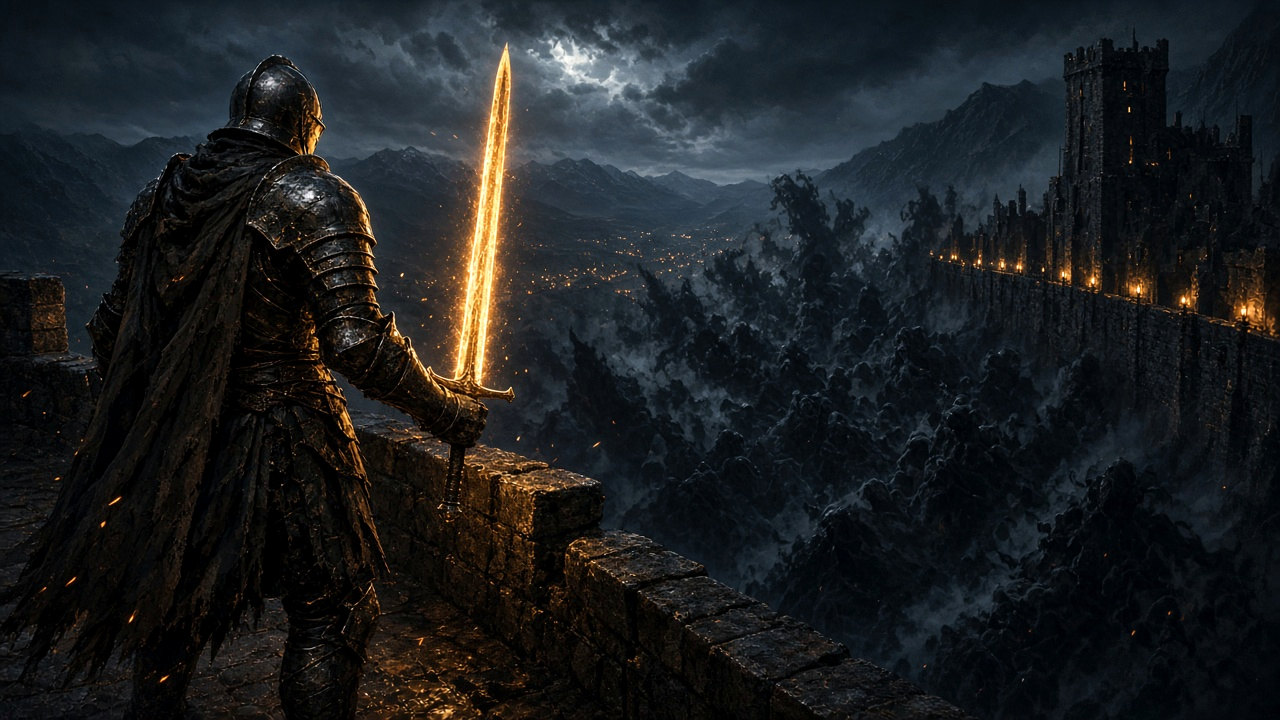
On the night the dark gathered in earnest, a young warden named Caleb took his place on the wall. He was not the strongest of them, nor the oldest. He had only this: he had promised he would not leave his post.
Below the keep, the valley was a sea of shadow. Shapes moved in it — tall and wrong, like men seen through smoky glass. They made no battle-cry. They only came on, as hunger comes on.
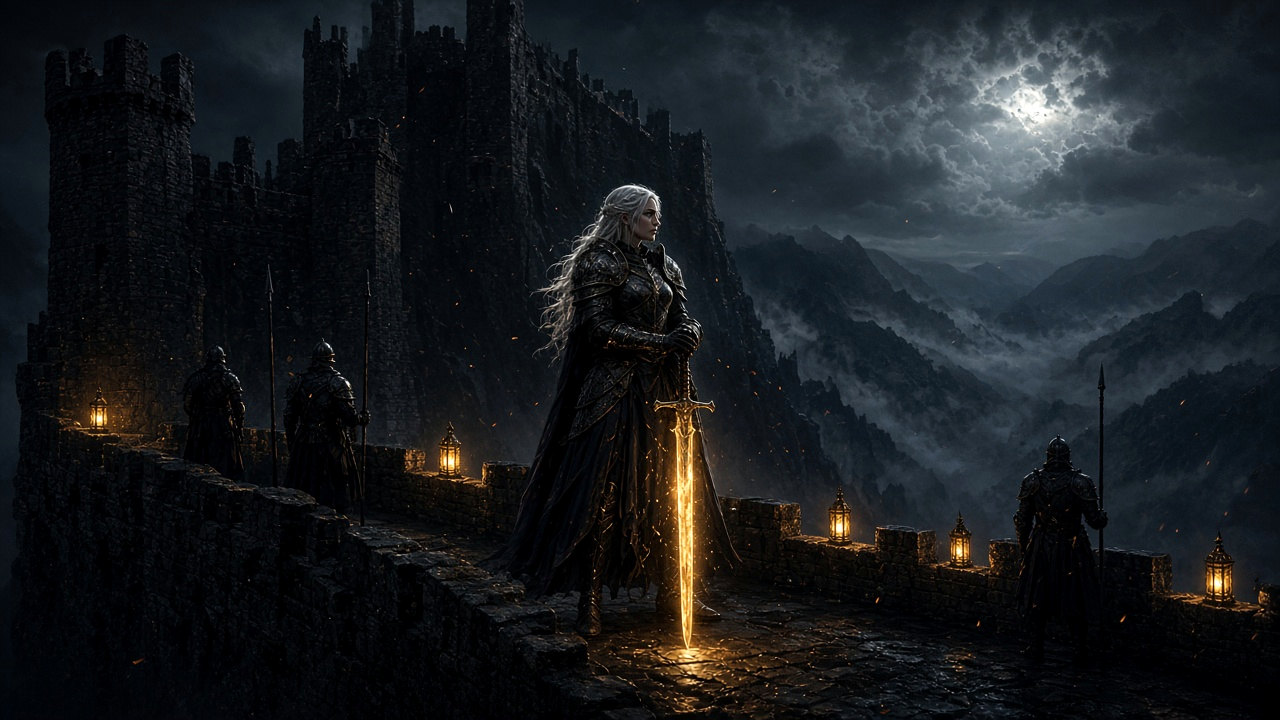
Caleb set his lamp in the notch of the stone and drew his blade. All along the wall, other lamps answered, a thin line of gold against the dark. The captain of the watch, a woman whose hair had gone white in the service of the light, lifted her voice.
“Hold,” she said. “The dawn is still promised. We are the ones who keep the promise.”
They held.
The first wave broke against the gate like a tide against a cliff. Steel rang. Fire leapt. The wardens did not give ground. When a lamp was struck from the wall, another hand lit it again. When a man fell to his knees, his brother lifted him. They fought not as heroes in a song, but as people who had decided, once and for all, that the dark would not have the valley.
Chapter IV
The Breaking of Dawn
Just before morning, when even courage grows thin, a single note sounded from the high tower — a horn of hammered bronze, older than the keep itself. The wardens knew it. It was the call that meant the last stand had become the first light.
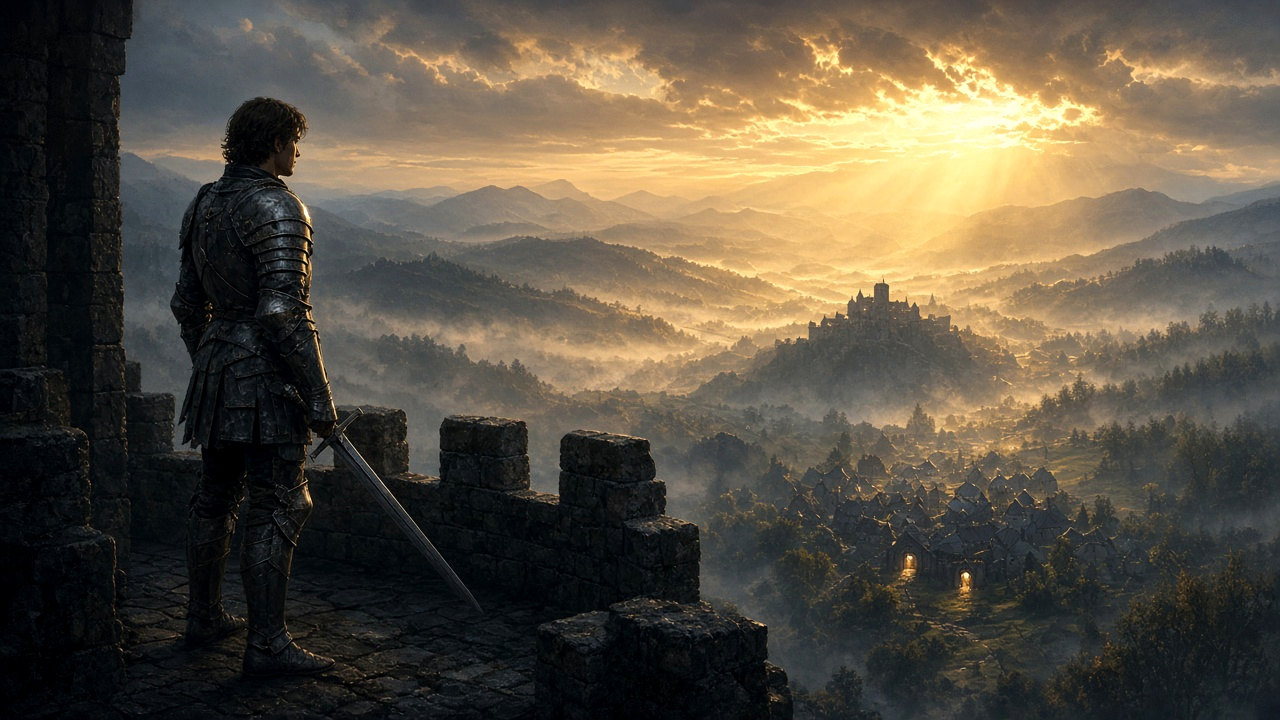
Caleb felt the change before he saw it: a warmth along the edge of his sword, a brightening in the east that did not wait for the clock of the world. The shadows recoiled. The wrong shapes lost their substance, as frost loses itself on a window when the fire is stoked. They did not fall in spectacle. They simply could not remain where the light had been welcomed and defended.
The sun rose. It rose on a quiet field, on a gate still standing, on men and women who had not surrendered the night.
In the valley, doors opened. People stepped out and looked up at the keep, and some of them wept, not from terror, but from the simple, stunning fact that morning had come.
Chapter V
The Name That Remains
The Wardens of the Ember are gone now, as all orders of flesh must go. Their keep is a ruin of black stone and open sky. But names, if they are true names, do not crumble as easily as walls.
DemonSlayer
It is a name that still means something. It means a stand taken when standing is costly. It means a lamp kept burning. It means that good, though it may be outnumbered, is not outmatched — not while someone is willing to carry the light.
A name like that does not belong on a forgotten list. It belongs to the one who will take it up, and make of it what the old wardens made of their watch: a promise kept.